
Secondary Water Drainage Layer Prevents Structural Damage
When it comes to sealing windowsills, there’s often uncertainty on construction sites – despite growing demand for professional execution.

Many are unclear about the key requirements: the windowsill must have a slope of at least 5°, be resistant to driving rain – and most importantly, be properly connected.

In practice, things often look different: plastered façades frequently lack the necessary slope, and in ventilated façades, the façade membrane is sometimes simply pulled up and glued to the window. The result: water can accumulate, flow back into the structure – and cause cracks in the plaster, rot, or expensive consequential damage.
This is especially critical in timber construction – but even in other building methods, a secondary water drainage layer provides lasting protection for the structure. So why is it often forgotten? Many tenders omit it, and some believe: “No one’s going to pay for that.” Yet the Swiss SIA standard 331:2012, Article 2.1.4, already requires that all connections to the building envelope meet the same standards as the window itself – including resistance to driving rain, airtightness, and thermal insulation.
Two technical drawings show how it’s done correctly: in both cases – central window installation in a solid wooden wall with external or internal insulation – the secondary water drainage layer beneath the windowsill reliably protects the sensitive parapet zone from moisture ingress.
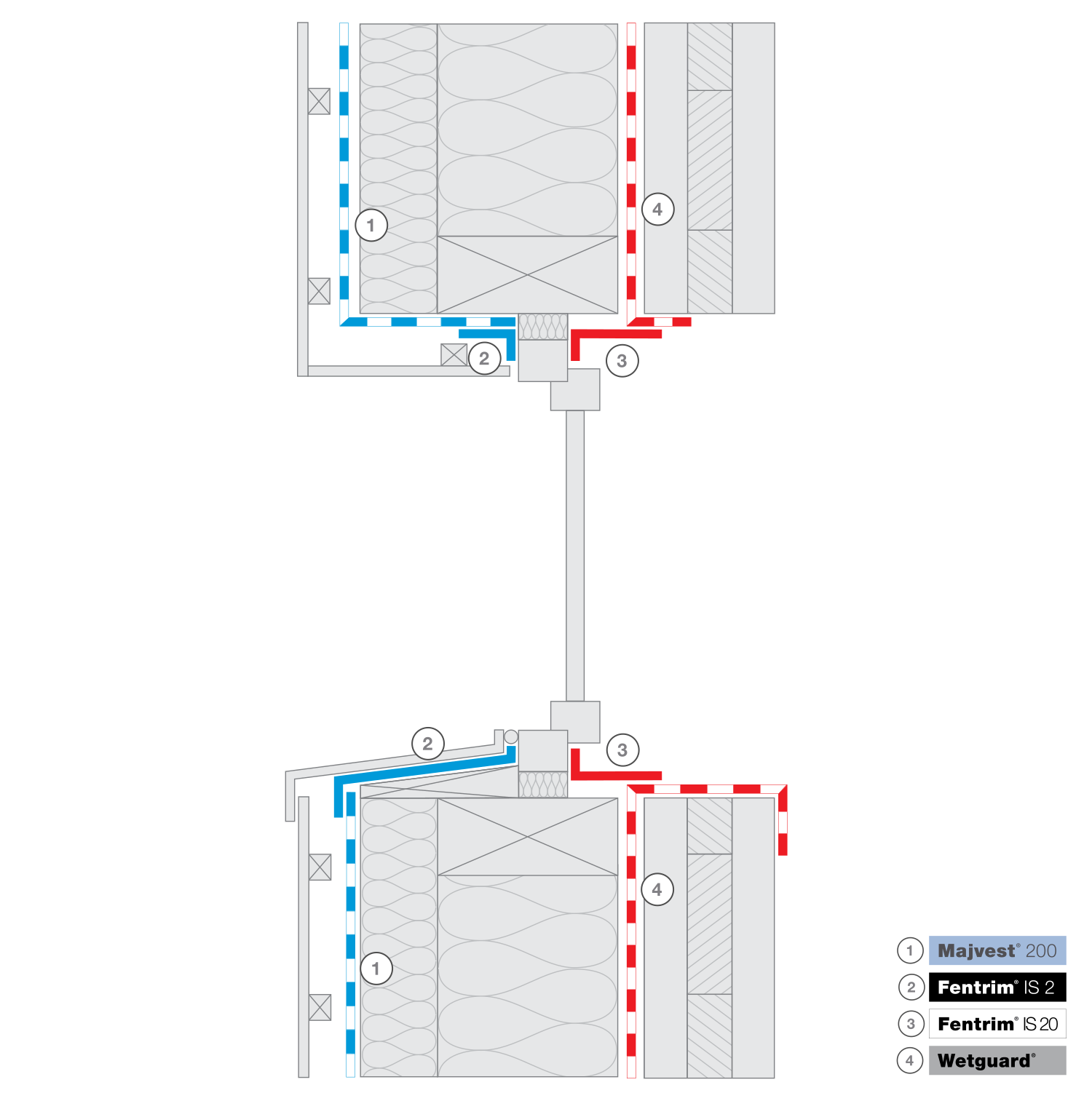
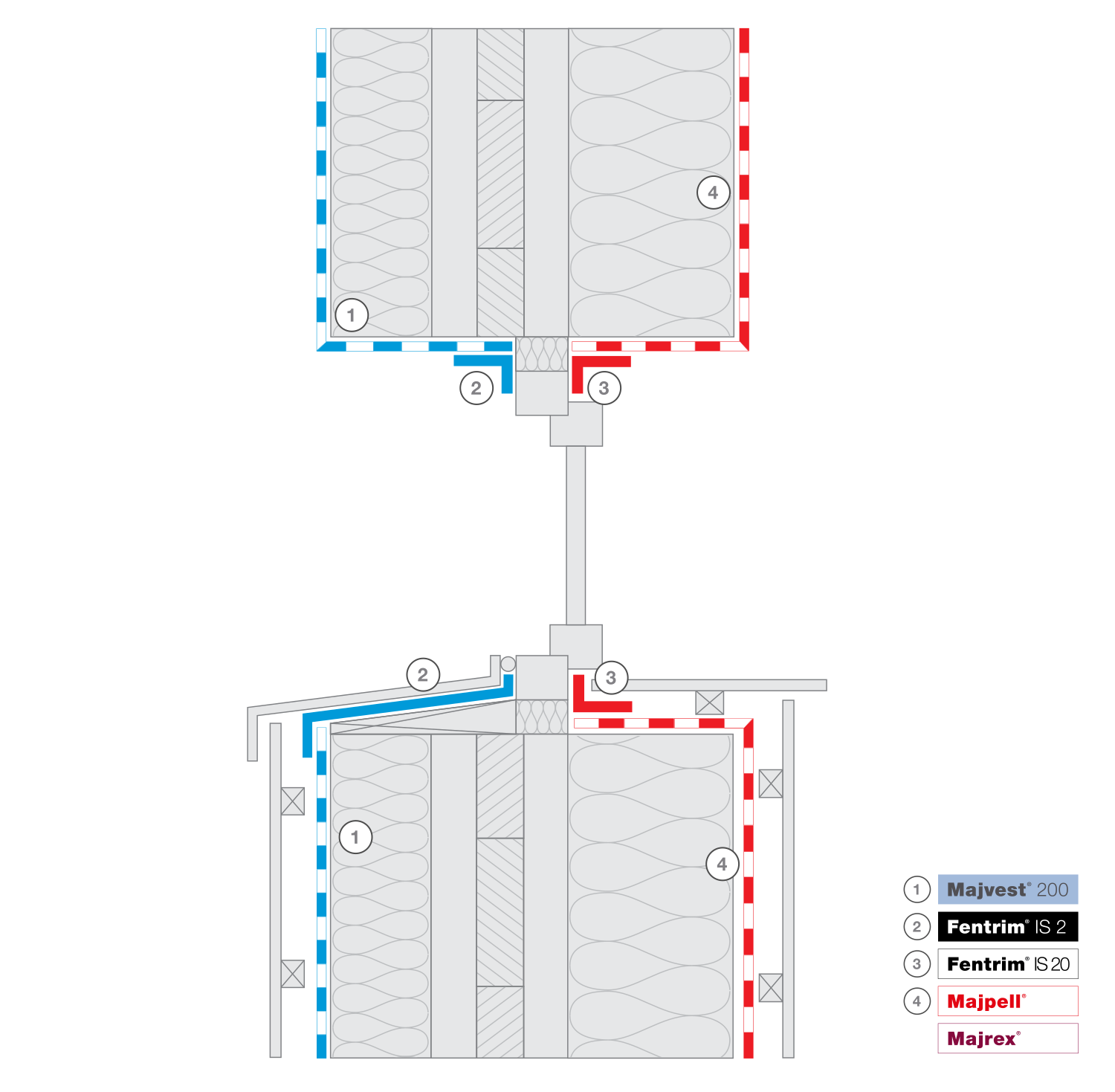
This is exactly where Fentrim IS 2 comes in. The self-adhesive membrane is applied directly beneath the windowsill in the direction of water flow and is approved for use from a slope of just 5°. Any penetrating water is effectively directed outward.
There is not yet an explicit standard requirement – but it’s coming. Those who already work with Fentrim IS 2 are not only protecting the structure, but also the quality of their own work.
Get expert advice now – and seal your windowsills securely and permanently. Your SIGA contact is happy to help.


Similar articles


